This evening as I walked toward Lake Michigan, I suddenly had the thought I’m almost exactly the same age Mom was when she died.
Then I thought, I have the life Mom would have wanted. Well, maybe she wouldn’t have wanted the public protest aspects. But among all my sisters and me, she would see the scope of possibilities she longed for, the freedom to take up space in the world.
As I approached the water, gray aqua and green against gray blue, a song I’d learned for our God’s Love Knows No Borders action came to me. It’s called just “The Wave,” and the songwriter, Miser, performs it as part of a longer song; but others have pulled out just one stanza and one repeated phrase, singing them in counterpoint.
It’s very odd to me, but as I age I become more aware of the ways misogyny has affected me throughout my life, and how I’ve been carrying an underground anger about it. This was where my thoughts turned next. The church in which we girls and women weren’t supposed to voice prayers aloud, even when we had an Easter hat or a Catholic doily pinned to our hair (we tried to obey certain scriptures very literally). The work as a bilingual secretary for $1.75 an hour, from which I was driven home to change clothes the day I wore a perfectly modest dress whose split skirt showed in the back. The husband who said the Bible gave him the right to demand sex on his schedule. The boss who didn’t want to promote me because I was so good at detail work—“you are irreplaceable.”
The resentment was mostly buried for decades. In the contemplation that retirement allows me—you will laugh, please do laugh—it has come into my awareness partly through online mahjong games that I often play. Certain pieces/symbols are masculine in my mind, and I find myself trying to rid the digital board of them as quickly as possible.
I try to keep the flowers and the birds, and to end each game with them. It’s surprising how often I succeed at that.
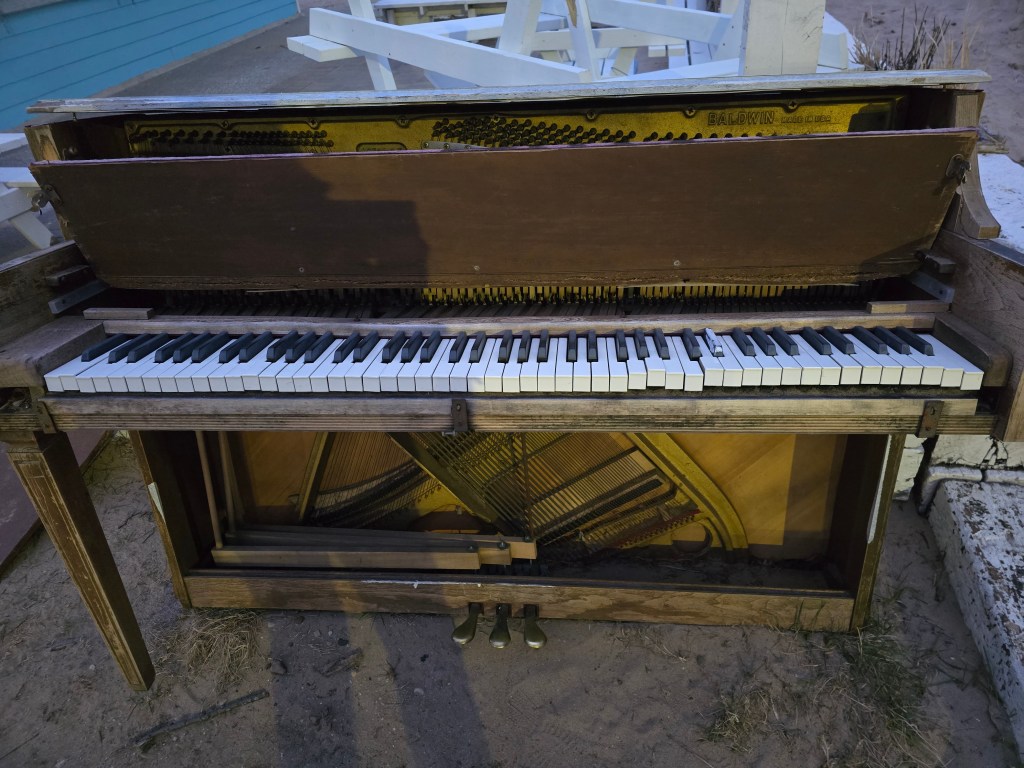
I started singing “The Wave” softly as I walked. And on the way home, there was no one at the beach piano. I found an octave in which most of the keys were not yet stuck, and played it.
So simple, and still one note couldn’t sound, but it was carrying me. Though I’m not sure what the songwriter originally intended, the song is saying to me that the pain and struggle of this time sometimes washes over me like a long wave. But “there will be better days”: waves can also buoy us. We rise and sink, and rise again.
I have happy, warm relationships with my brothers, my son, many male church friends, writers, artists, activists. When I encounter misogyny, I can back away and leave it to God. When it’s expressed against another woman, I can speak up to support her.
Despite the limitations my mother experienced, she had a beautiful, meaningful life, and she never stopped growing. When her time came, she let the wave of death wash over her with peaceful abandon: she knew she was headed toward greater Life. I pray to be like her.
Praying with children is one of the most important things we can do to foster their life with God.
My kids and I prayed before meals throughout their growing-up years, and spontaneously anytime they were hurt, frightened, or sick. But the most important time for prayer was bedtime. After I read a picture book or a middle-grade book chapter to them, and a Bible story, we took turns praying. Then I sang something peaceful as they drifted off to sleep. This practice calmed and nurtured all of us and bore sometimes surprising fruit.
Our routine was modeled on my own experiences growing up in a large family with missionary/teacher parents.
Prayer in the Land of Gorings
Not all those early experiences of prayer were nourishing. Our dad would periodically decide to lead family devotions following breakfast. It always fell flat—I can’t remember a single time that morning devotions didn’t feel awkward and pedantic, with Dad posing schoolroom-type questions that failed to engage our lives or our struggles. The practice always petered out after a few dutiful stabs at this perceived obligation.
Bedtime prayers were a whole other story. For years—beginning in our eldest sister’s infancy—little Gorings gathered in PJs each night for the enchantment of a poem or two read aloud, followed by a story or book chapter, a Bible story, humorous songs and a hymn or two, and finally prayers. It was our warmest time together; it grew our imaginations and helped to form an indelible family culture that keeps my siblings and me deeply bonded to this day. We have all remained in the faith.
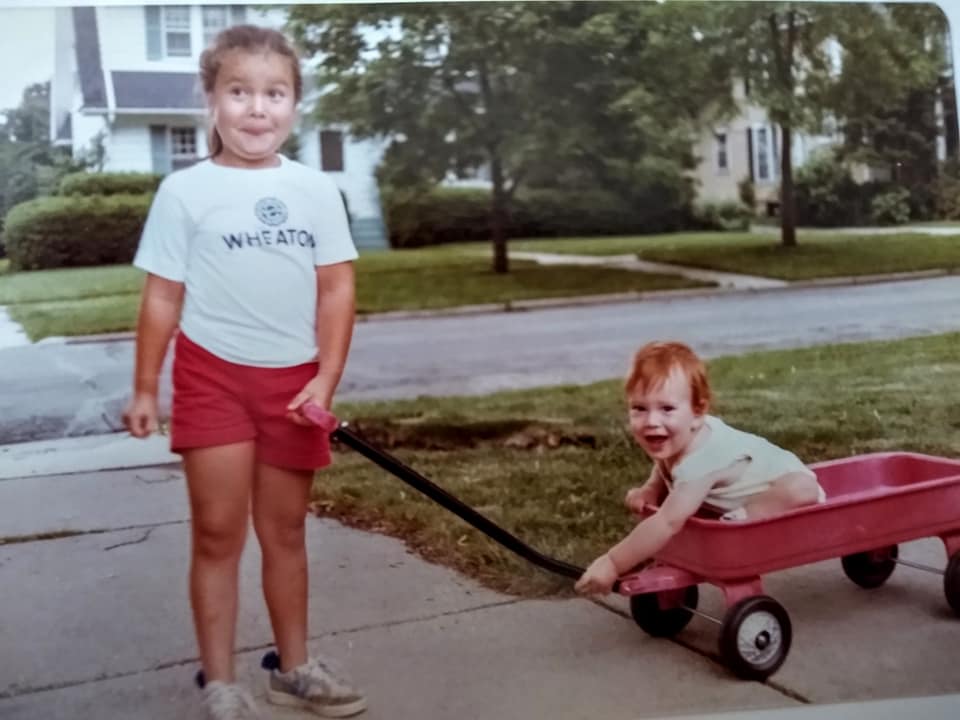
Arrayed in our pajamas just before going to bed and starting the nightly ritual. That’s me on the left. Three more siblings were yet to come! And then my parents adopted two more when the rest of us had grown into young adults.
Bedtime is best
What makes bedtime a particularly rich time to pray with our little ones? I think there are a couple of reasons.
First, as they become sleepy children’s normal defenses go down. Especially if the parent is unhurried and attentive at bedtime, children may get in touch with tender or sad feelings and blurt out things they’d not say in daylight.
It is a gift just to find words for our feelings and experiences. Then they can be brought to God in prayers of thanksgiving and petition.
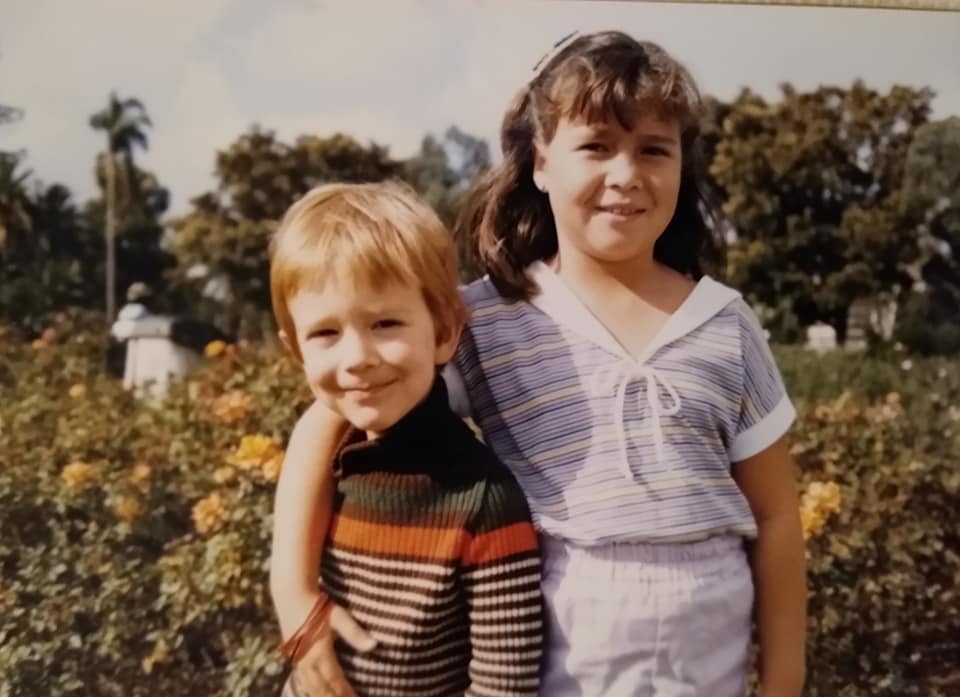
Two favorite photos of my kids in childhood
Second, bedtime is a natural time to think back on the day and look forward to what is coming. Cindy Bunch’s Be Kind to Yourself (IVP, 2020) wasn’t around when I was a young mom, but if it had been, I’m pretty sure I would have used its simple examen questions—what’s bugging you? what’s bringing you joy?—to help my kids articulate hardships of the past day and places where they had sensed God’s presence.
Kid-friendly prayers
Prayer with children can take other forms too. My picture book Isaiah and the Worry Pack (IVP Kids, 2021) models an imaginative way of meeting God through guided imagery. It’s based on an experience my son Graham and I had together one night when he struggled with some big worries. Jared Patrick Boyd suggests ways to pray Scripture imaginatively with children in Imaginative Prayer (IVP, 2017).
Memorized prayers can be helpful too. When I was a child, we often recited “Now I Lay Me.” Its mention of death would make it off-putting to many parents nowadays. But falling asleep is entering another country, mysterious and affording children even less control than they have over their waking hours. Maybe it’s not so bad to provide our kids a prayer that contains their fears within a little rhyme that expects God to hold them in both waking and sleeping, living and dying.
Some lovely prayers to read and perhaps memorize with kids—in daytime as well as at bedtime—can be found in Traci Smith’s Prayers for Faithful Families (Beaming Books, 2020). And a great resource is coming soon from IVP Kids: Little Prayers for Ordinary Days by Tish Harrison Warren, Flo Paris Oakes, and Katy Hutson (2022).
Singing as prayer
Singing can be a prayer practice too, of course. I adopted my daughter Claire at age one after she had suffered serious neglect and starvation in an institution during her first six months of life. As she grew, she became especially fond of the hymn “Children of the Heavenly Father.” For years she requested it practically every night, along with prayers that she wouldn’t have bad dreams.
Claire at 18 months, now in the US, with my mother, Susy Goring, who had literally rescued her from death.
Years later Claire was at the National Registrar’s office in her birth country, Colombia. She’d entered to apply for her identity card so that her dual citizenship could be recognized. An encounter with the director of the new digital population database led to an amazing bonus: printouts of the birth, ID, and death records of her birth mother!
Holding these documents, Claire wandered out onto Plaza Bolívar toward the national cathedral while waiting for a friend to complete an errand of her own.
Then from inside the huge church she heard music—the organist at this Colombian Roman Catholic cathedral dedicated to the Sacred Heart of Jesus began playing a Swedish Lutheran hymn, “Children of the Heavenly Father.”
Claire told me later that her heart began pounding in surprised awe. But she was also flooded with peace. Even though she’d just learned that she’d never meet her birth mother in this life, she might be able to track down other members of her biological family, now that she had her mom’s documents. And the hymn reminded her that the gentle, attentive Father she had met in bedtime prayers would be with her. All along God had been bearing her, as the hymn says, “in his mighty arms.”
Note: I have many stories of funny and extraordinary conversations about God that arose out of prayers with my kids. Too many to tell in one post! So I welcome you to subscribe (above right, next to the title of this post) if you’d like to read them in the coming weeks.







 Ruth Goring