
Staying awake with Jesus

Good Friday worship can awaken a whole raft of emotions: love, gratitude, sorrow—and sometimes rage. In the final weeks of his life, Bonhoeffer wrote, “Christians stand by God in God’s hour of grieving.” What does that mean for us now?


I walked home from church last night in a hot rage. Actually there was a mess of emotions—tender desire to stay awake with Jesus in his suffering; gratitude for the creative devotion of those who had crafted a series of sensory meditations to help us do that; distress over the loss of a beautiful Palestinian girl-child, which I had learned about on social media earlier that evening, and a beautiful Palestinian boy-child’s loss of limbs.

And fury at the broken promises of my country.

In eighth grade I was in the USA with my family, and in home room at Milburn Junior High School that year we were shown jerky films of skin-and-bones survivors of Nazi concentration camps. I will never forget those naked forms of human beings, beloved of God, starved to barely-aliveness. Barely able to walk, weighing barely enough for gravity to hold them to the earth. Those films came with solemn assurances that now we had the United Nations, we had an international system to make sure the Holocaust would never happen again.

Habiba and Mahmoud would beg to differ. The very country that claimed credit for stopping the Holocaust is now supplying the bombs raining down on the tents where their families are taking shelter. And that very country has been blocking the United Nations from putting an end to the genocide.

And it is my country. And many, many of us around the world are desperate to stop the violence, and thus far we have failed.

So I have no Easter platitudes to offer. I will go to church again on Sunday morning, and I’ll take joy in the resurrection story—I will cling to the hope it provides. But in my heart, until Israel’s crazed violence against the Palestinian people and land has been brought to an end, I will keep trying to stay awake with Jesus. Because Jesus is suffering with Mahmoud, and with Habiba’s bereft family, and with all of Palestine.

Habiba’s name means Love. She was killed on Good Friday.

Processing…
Success! You're on the list.

How we picture God affects everything

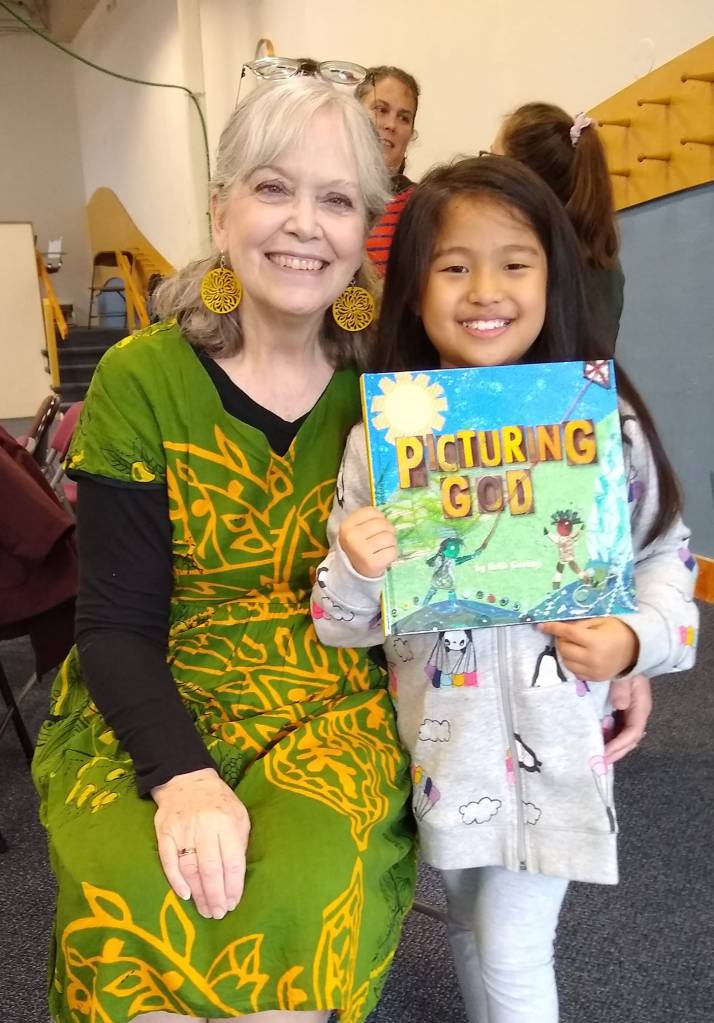
Wow. Scientific American has just published a piece by Daisy Grewal summarizing a research review by psychologist Steven O. Roberts & colleagues. Various researchers have investigated how people’s (including children’s) internal image of God relates to their internal image of an ideal boss or leader. A summary of their conclusions reads almost like an academic-style recommendation for Picturing God!

Our assumptions about who should rule in heaven strongly affect our preconceptions about who should do so on earth. Historians have argued that a white view of God has been prevalent in the U.S. since the 1830s and was actively embraced and promoted by white people in order to assert and justify their greater social power. Manipulating individuals’ conceptions of the deity appears to be an effective way to reinforce beliefs about who belongs at the top of the social hierarchy. And as shown by the study with children, these views develop at an early age and are deeply ingrained in our psychology. While troubling, this observation also offers hope that by exposing children to more diverse representations of God, such as through books or other media, we can reduce racial prejudice.

Our picture of God affects our racial attitudes, friends. Let’s be actively antiracist in choosing the books we share with our children.

If you haven’t yet gotten your copy of Picturing God, or if you need to give it to some of the children in your life, you can purchase it here!

Children of all races & backgrounds–not just children of color–need to develop their imagination about God through the many beautiful biblical metaphors instead of picturing God as an old white man.