
Dearworthy

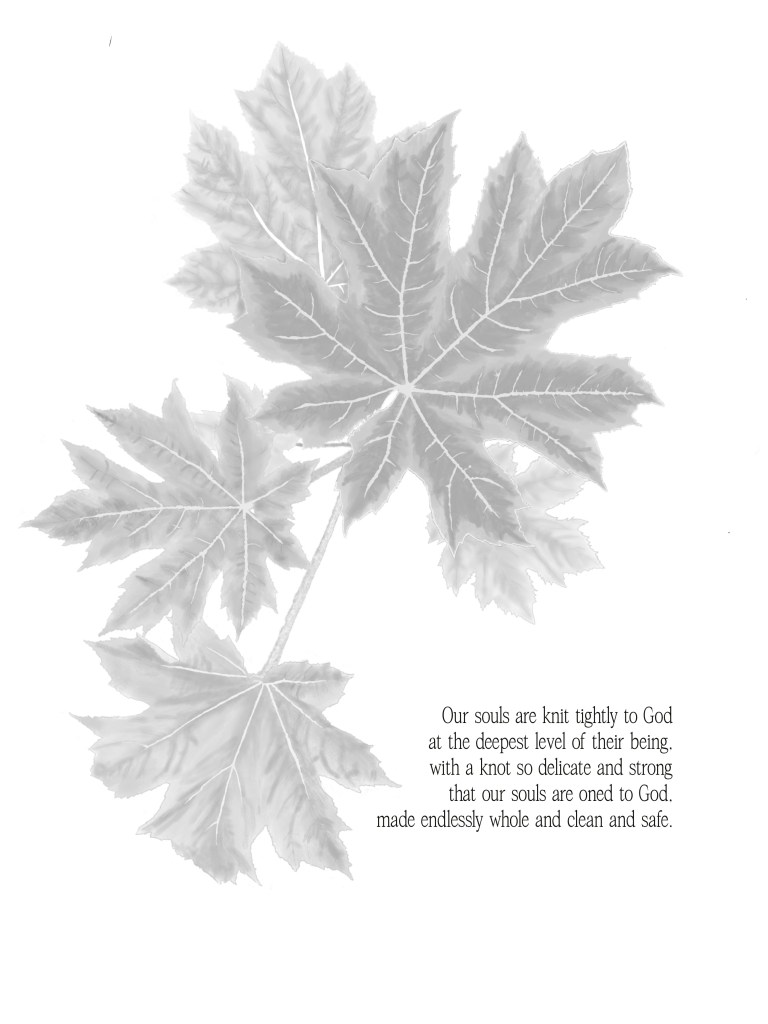
My book has launched! Anyone who has caught sight of me here or on other social media in the past couple of years knows that for a while I’ve been writing and thinking about the medieval Christian mystic Julian of Norwich and creating botanical art to accompany key excerpts from her writings. Now these meditations are available in a lovely little collection published by Anamchara Books.
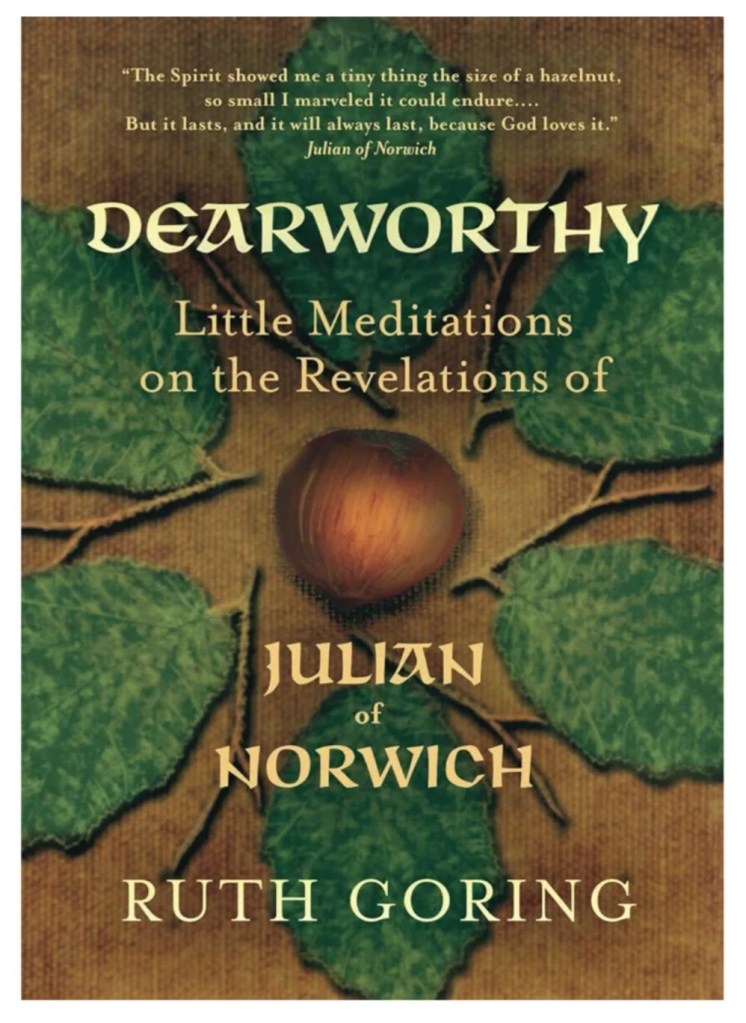
The work has been a beautiful journey for me: it involved not only learning a lot about Julian but also learning digital art techniques—some via online classes, some by trial and error. All writing is discovery, and this writing led me into my pain and failures but also into breathtaking experiences of the immense and tender love of God.

What does it mean to be “oned” to God? For me it has meant centeredness in God’s steady presence, release from nagging anxieties—and also new freedom to act in public solidarity with God’s beloveds who are suffering. The song that God sings over us is a song of suffering-with, of being-with. It is for sharing, for as Julian says (in Ellyn Sanna’s paraphrase), “The happy comfort revealed to me is big enough for us all.”
Dearworthy: Little Meditations on the Revelations of Julian of Norwich is an invitation into profound comfort and belonging and meaning. I hope you will read it and share it with others. I pray that it will be a good companion in your own journey into Love.

Full of endless heavens

Twilight in my neighborhood

For a few years now I have been pondering the words of Julian of Norwich, the medieval woman who at age 30 received a series of “showings” or revelations of the love of God. She dedicated the rest of her life to praying through these visions, asking God questions about them, deciphering their meaning. In fact after she wrote them down, she began writing them again as she understood more.

Julian moved into a small anchorhold–a monastic cell built against a wall of St. Julian’s Church in the city of Norwich, England. Another woman lived in an adjoining cell and took care of her practical needs so that Julian could live as an anchorite, mostly in solitude for prayer and writing but in the afternoons receiving visitors who came to her porch window to seek her counsel.

I feel a great kinship with Julian, not because I possess comparable wisdom and dazzling intellect but because I too have had deep experiences of God’s love. Julian’s insights speak to my heart. They are carrying me through these years of terrifying climate change and pandemic and war and the violence of white supremacy. Julian is an older sister who holds my hand, grieves with me, and helps persuade my anxious body to rest in love.

The title I chose for this post is from an extended meditation on a brief vision Julian received. A lord (remember, she lived in medieval England) is sitting on a throne with a servant nearby. The lord asks the servant to take care of a certain task, and the young man leaps up to obey–but immediately stumbles and falls. Instead of berating him for his awkwardness, the lord descends from the throne and kindly takes his hand to help him up.

Julian is fascinated by this parable/vision and spends several pages interpreting it. The lord, of course, is God, and the servant is the paradigmatic human being, Adam. The first sin committed by the first humans in the book of Genesis has long been called “the fall.” But Julian is moved and astonished to see how gently God responds to Adam’s offense. This was not the God portrayed in most church sermons in her day.

Julian shares other insights as she digs into this parable–too much to explain here. What I’ve been carrying around in the notes app on my phone is one phrase: within the lord she sees “a great refuge, long and wide and full of endless heavens.”

Every time I read it, I must stop and take a deep, glad breath.

God is some kind of a river, some kind of a sky, some kind of a forest in which every vulnerable created thing is welcomed and protected.