A prayer for the beaches of Gaza

by Ruth Goring

Before the ruin
when the sea was green breaking to white
and children chased each other
when the sun was life
and they picnicked: olives, hummus, bread

After the ruin
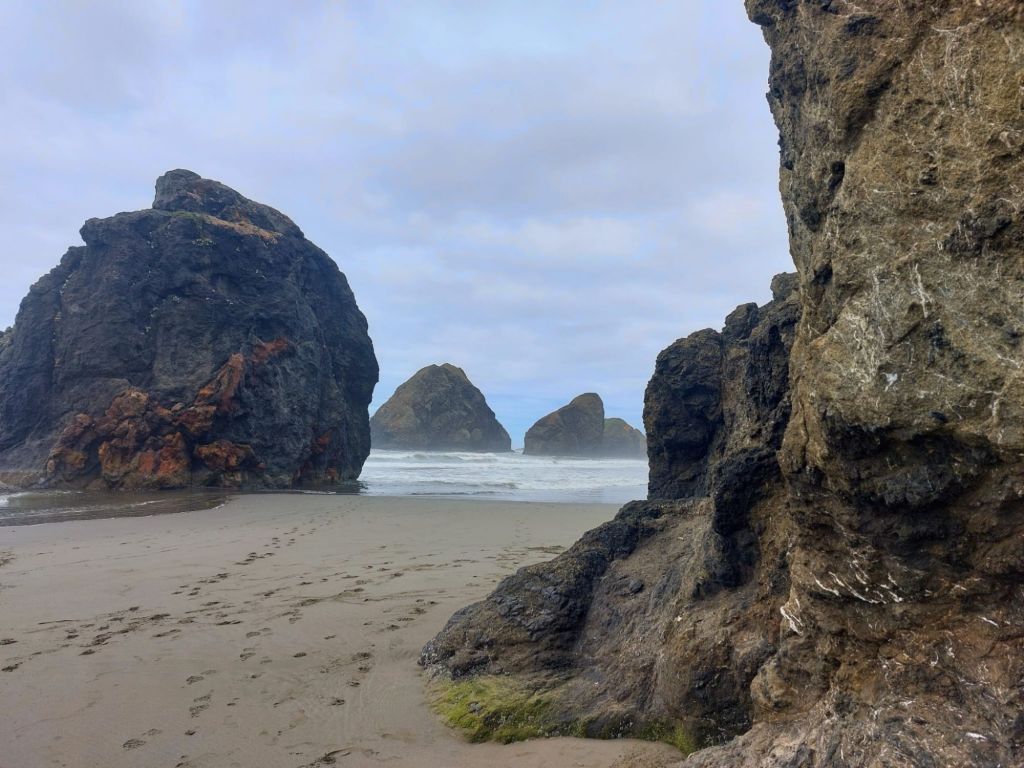
with my sister I walk among giants of rock
on the south coast of Oregon
Angels, old and black,
chant their subduction
the clash of volcanoes, islands
and small continents shoved up against
the continental plate

In Gaza the ruin has not ended
With no thought of beaches
hounded children crouch in tents
Their parents seek just a little flour
for bread

Dear angels of subduction
we set our hands on your vast shoulders
we ask for your strength
we pray against ruin

Before we rose, in the daylight of Gaza
bombs rained on the camps
and demolished demolished
one father, four children in a tent

One mother is left
and she has no feet

What is this world
What is this crashing
What raided the house of our belonging
left doors swinging on broken hinges
What suffocates us all
What ruin

Dear sentinels, dear Old Ones
we are not strong like you
we need our feet
we need gentleness and food
Dear God in heaven
come to the beaches of Gaza
and the tents, come now

Tell us
how we live in this bombing
or far away from it
with helpless hands

I walk out to one of the giants
lean against its ancient bulk
A wave rolls in over my feet
How do I live

Staying awake with Jesus

Good Friday worship can awaken a whole raft of emotions: love, gratitude, sorrow—and sometimes rage. In the final weeks of his life, Bonhoeffer wrote, “Christians stand by God in God’s hour of grieving.” What does that mean for us now?


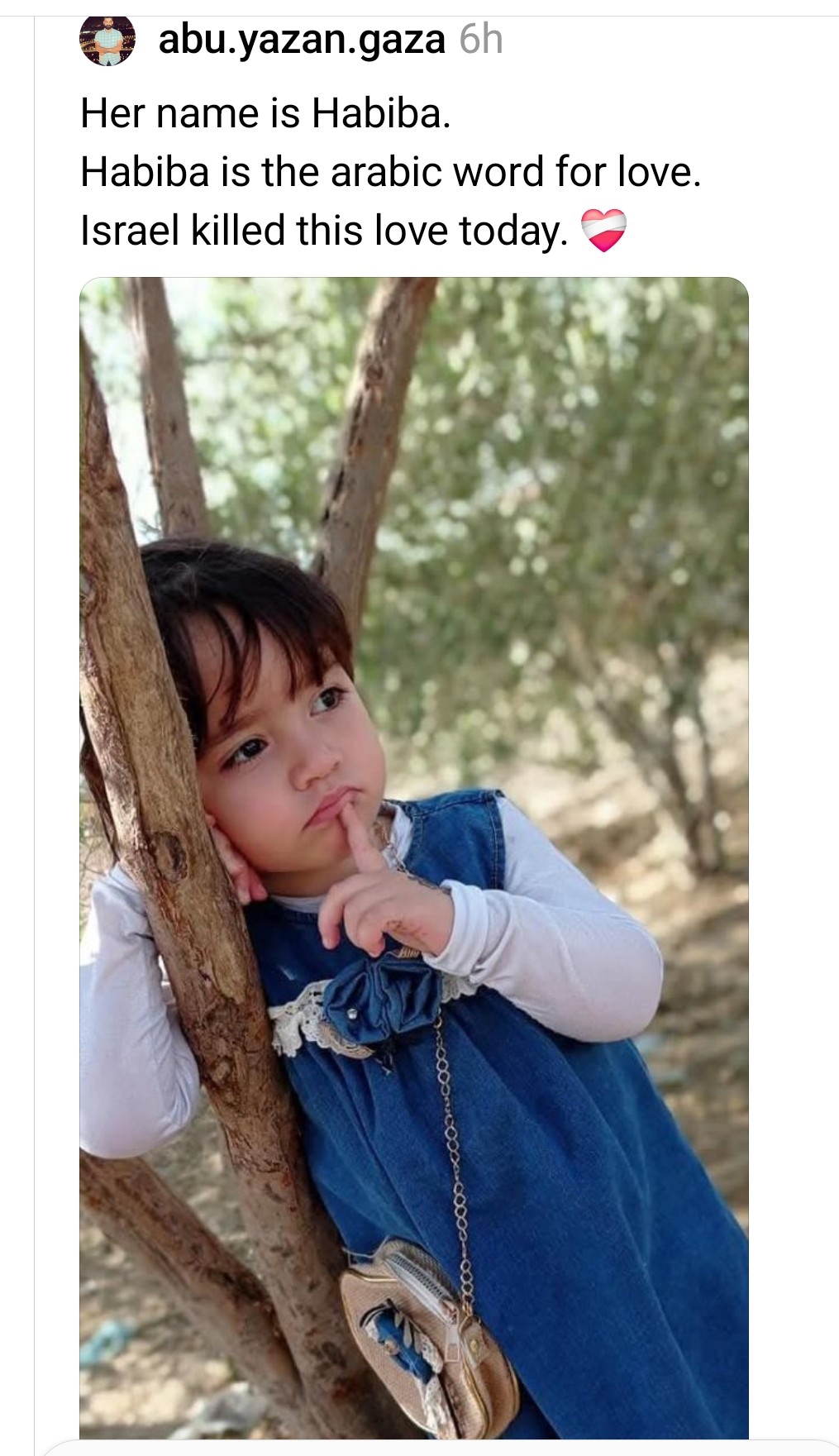
I walked home from church last night in a hot rage. Actually there was a mess of emotions—tender desire to stay awake with Jesus in his suffering; gratitude for the creative devotion of those who had crafted a series of sensory meditations to help us do that; distress over the loss of a beautiful Palestinian girl-child, which I had learned about on social media earlier that evening, and a beautiful Palestinian boy-child’s loss of limbs.

And fury at the broken promises of my country.

In eighth grade I was in the USA with my family, and in home room at Milburn Junior High School that year we were shown jerky films of skin-and-bones survivors of Nazi concentration camps. I will never forget those naked forms of human beings, beloved of God, starved to barely-aliveness. Barely able to walk, weighing barely enough for gravity to hold them to the earth. Those films came with solemn assurances that now we had the United Nations, we had an international system to make sure the Holocaust would never happen again.

Habiba and Mahmoud would beg to differ. The very country that claimed credit for stopping the Holocaust is now supplying the bombs raining down on the tents where their families are taking shelter. And that very country has been blocking the United Nations from putting an end to the genocide.

And it is my country. And many, many of us around the world are desperate to stop the violence, and thus far we have failed.

So I have no Easter platitudes to offer. I will go to church again on Sunday morning, and I’ll take joy in the resurrection story—I will cling to the hope it provides. But in my heart, until Israel’s crazed violence against the Palestinian people and land has been brought to an end, I will keep trying to stay awake with Jesus. Because Jesus is suffering with Mahmoud, and with Habiba’s bereft family, and with all of Palestine.

Habiba’s name means Love. She was killed on Good Friday.


Processing…
Success! You're on the list.

Today’s poem is a bird

A poem by Cynthia Wallace, with my Spanish translation

The Uvalde massacre, & before it the Buffalo massacre, is too painful–& too telling of the deep wrongs of my country. This poem disavows its own importance, but it is necessary right now. We need poets & artists to help us get through these terrible days.

After the poem I’ll link pieces by the wonderful young writer/theologian Danté Stewart that have also helped me. I think you’ll be strengthened by them too.

Peace to you, and hold your children close.

Today’s poem is a bird

perched on the top of a fence.

Does the world need another poem?

The world needs

another bird

perched on the top of a fence.

The world needs me to scrub this pot

and scour this sink and sweep these crumbs.

The world needs me to brush this budding

grown-up tooth in my boy’s mouth,

and all the baby teeth beside it.

The world needs

to cry out for the baby teeth,

the milk teeth,

the ragged grown-up teeth

not yet smooth,

gunned down on this very day

in the United States of America.

The world needs to sing a keening sorrow song

with the mothers seeing their children’s toothbrushes tonight,

the notes so true they ring out a silent scream.

The world doesn’t need another poem.

The world needs a revolution.

The mothers need to have their children.

The mothers need to be telling their babies to

brush their teeth and get along to bed.

Cynthia R. Wallace


El poema de hoy es un pájaro.

posado en lo alto de una cerca.

¿Necesita el mundo otro poema?

El mundo necesita

otro pájaro

posado en lo alto de una cerca.

El mundo necesita que yo friegue esta olla

y que restriegue el fregadero y barra estas migajas.

El mundo necesita que yo cepille este capullo

de diente adulto en la boca de mi niño,

y todos los dientes de leche a su lado.

El mundo necesita

clamar por los dientes de leche,

los dientes de adulto irregulares

aún no alisados,

en este mismo día acribillados a balazos

en los Estados Unidos de América.

El mundo necesita una canción de luto esta noche

con las madres que miran los cepillos de dientes de sus hijos,

notas tan afinadas que resuenan en grito silencioso.

El mundo no necesita otro poema.

El mundo necesita una revolución.

Las madres necesitan tener a sus hijos.

Las madres necesitan mandarles a sus bebés

que se cepillen los dientes y suban a la cama.

—C. R. Wallace, translated by Ruth Goring


An interview and an essay from Danté Stewart for this time of grief:

“After Uvalde school shooting, minister Danté Stewart says to protect your humanity in grief,” interview by Tonya Moseley and Samantha Raphelson on Here and Now, WBUR (Boston Public Radio)

“After shootings in Buffalo and Texas, it’s clear dark days require deep love,” Andscape

Bedtime conversations

My last post hinted at the wild conversations that can happen with children when bedtime is filled with songs, stories, and prayers. My own kids shared a bedroom for years because of a tight budget, so our bedtime ritual involved them together. Many of our most important conversations happened during those years.

            No topic was forbidden. My children’s defenses would be down, and sometimes they’d blurt out rather extraordinary things.

Claire: Why do angels always carry torches?

Mom: I didn’t know they did. Have you seen an angel?

Claire: Yeah, the other day I ran around the corner of Andrew’s house and there was an angel.

Mom: Oh wow, did you talk?

Claire: Yeah. I told him I was sorry for saying bad words.

            As a missionary kid and InterVarsity Christian Fellowship alum, I’m stuck for life with an internal theology monitor. My invisible antennas went up as my daughter spoke. Claire’s angelic encounter seemed to pass scriptural tests: it was unexpected and it prompted repentance. I couldn’t recall any Bible story book illustrations of angels carrying torches (for Brits, flaming torches, not flashlights). But the mental image is beautiful, and completely consonant with biblical imagery.

After singing Christmas carols, before we trooped up to their room for the rest of bedtime.

It was at bedtime that my children told me—together—that they’d decided they wanted to be baptized.

It was at bedtime that they told me they hoped a family member traveling abroad would die instead of coming home.

            It was at bedtime that they told me they’d conferred with each other and agreed that they hoped a family member traveling abroad would die instead of coming home. I held in my shock and did not reproach them but asked why. Their answer was a revelation to me, helping me understand that the family environment needed to be made safer for them.

            Some years later, when my kids had their own rooms, Graham and I had a bedtime conversation and prayer very like that in Isaiah and the Worry Pack. It was a God-encounter for both of us. A week or so later, I asked him how his sleep had been. “OK,” he said. “If I’m having trouble sleeping, I just run a mini-version of ‘The Worry Pack’ like a video in my mind.”

            That was when the thought came to me that perhaps someday I should make our experience into a book.

            Claire was in junior high when she told me at bedtime that some peers at school made fun of a disabled classmate and she had joined in. Later, on her own initiative, she had apologized tearfully to the girl, and they became friends.


Finally, there were the daytime conversations that emerged from our bedtime sharing. One fall afternoon when Claire was three, we were driving in the neighborhood and I called her attention to a small maple tree whose leaves were afire. “Isn’t it gorgeous?” I rhapsodized.

            Claire burst out from the backseat, “I love God!”

            Bedtime talks and readings had formed her to see the world theologically, as made and sustained by God.


My children were no more creative than the children in your life are; they had no more capacity for entering God’s presence than your children have. So as you wake up to God’s love and learn new, fruitful ways to pray, share your experiences with them. Of course what you share needs to be at their level, and it needs to connect naturally with their lives and struggles.

            There’s no telling what new adventures you’ll have together. And sometimes you’ll find your young ones leading the way.